Shiatsu and the Nervous System: Why Slow Pressure Feels Different
Updated 18 August 2026
People sometimes ask what they should expect to feel during a Shiatsu treatment. Usually, it is nothing particularly dramatic.
Breathing may become slower. The jaw and shoulders might soften. Areas that were holding tension can gradually feel less guarded. Attention often shifts away from whatever has been going on during the day and more towards the body. Some people fall asleep, while others simply describe feeling very still or settled afterwards.
It is common now to explain these kinds of changes through ideas like "vagus nerve activation". There is some interesting research looking at touch, breathing and the autonomic nervous system, but the evidence does not really support reducing a whole Shiatsu treatment to one mechanism.
That has influenced the way I approach treatment. I generally use gradual pressure, sustained contact and comfortable movement, while giving the person enough time to respond to what I am doing.
This article looks at some of the physiology that may help explain why that kind of touch can feel different.
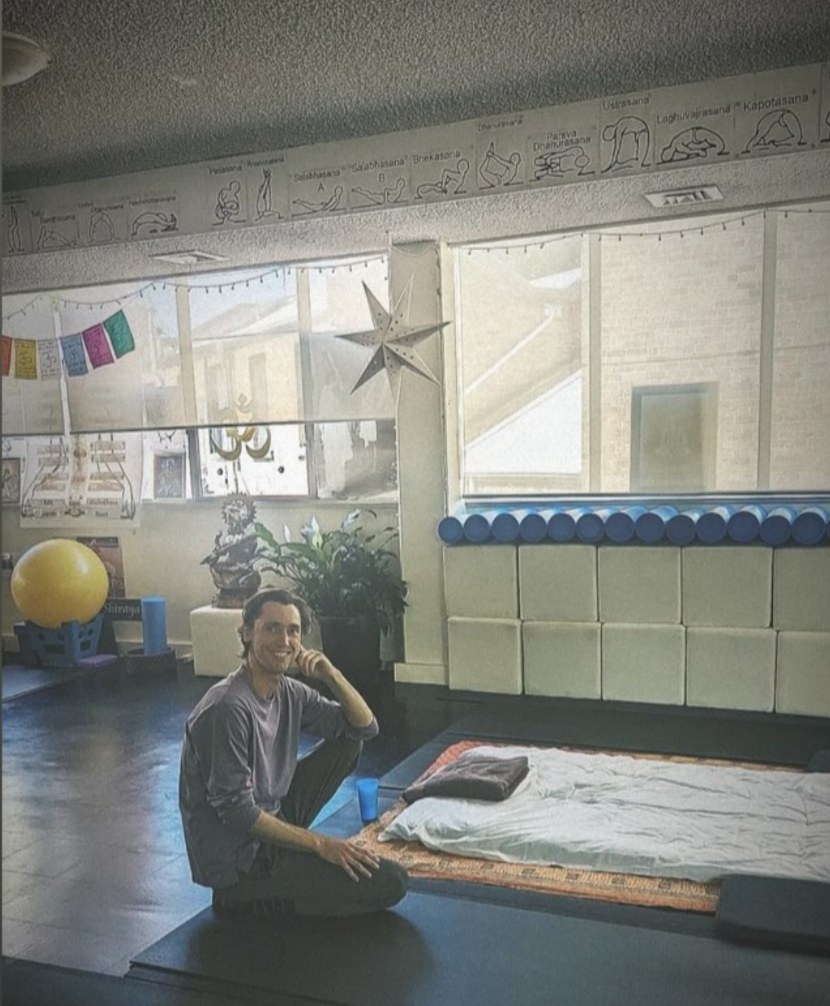
Breath, movement and attention — practices that sit alongside my approach to bodywork.
The Autonomic Nervous System
The autonomic nervous system helps regulate processes that we do not have to consciously control, including heart rate, blood pressure, digestion and breathing.
It is commonly divided into the sympathetic and parasympathetic nervous systems. The sympathetic system is often associated with mobilisation and activity, while the parasympathetic system is associated with rest, digestion and recovery.
This distinction is useful, but the nervous system is constantly adjusting rather than simply switching between two states.
Heart rate changes when we stand up. Breathing changes depending on what we are doing and how we are feeling. Muscles can increase their tone before movement even occurs.
Touch also happens within this changing environment. Pressure that feels comfortable and predictable can be experienced quite differently from pressure that feels sudden, painful or unexpected.
Touch Is More Than Pressure
Touch begins with physical stimulation of the skin and underlying tissues, but our experience of touch is produced by the nervous system.
The skin contains receptors that respond to pressure, movement, vibration, stretch and temperature. These signals travel through the nervous system and are interpreted alongside other information, including what is happening around us and what we expect to happen.
Because of this, the same amount of pressure can feel very different depending on how quickly it is applied, where it is applied and whether the person feels comfortable receiving it.
A large 2024 meta-analysis published in Nature Human Behaviour examined 137 randomised studies of touch interventions and found measurable effects across a range of physical and mental health outcomes.
The research included many different forms of touch rather than Shiatsu specifically, so it cannot tell us exactly what is happening during a Shiatsu treatment. What it does show is that therapeutic touch can have measurable effects, and that the way touch is delivered is worth paying attention to.
Why Slow Pressure Feels Different
Shiatsu commonly uses sustained pressure rather than continuous rubbing or kneading.
Pressure is gradually transferred through the palm, thumb, fingers or sometimes the elbow, and then held for a period of time.
For me, one of the important parts of working this way is that it gives both the practitioner and the receiver time.
The person has time to feel the pressure and breathe with it. I have time to notice whether the area begins to soften, remains guarded, or whether I need to reduce the pressure or change what I am doing.
The nervous system is continually interpreting sensory information. This does not mean slow pressure is "resetting" the nervous system, but the timing, intensity and predictability of touch can influence how that touch is experienced.
The treatment also involves more than the pressure itself. The position of the body, temperature of the room, breathing, rest, attention and expectations can all contribute to how someone responds.
A session is a whole sensory environment — light, temperature, rest and expectation all shape how the body responds.
What About the Vagus Nerve?
The vagus nerve is an important part of parasympathetic regulation, but I am cautious about saying that Shiatsu simply "activates the vagus nerve".
During a treatment many things are occurring at the same time.
The person is lying down. Their breathing may slow. They are receiving tactile stimulation. Their posture changes. Their attention shifts towards the body. They may also simply feel comfortable enough to rest.
A 2020 study published in Scientific Reports found changes in heart rate variability following massage, but the researchers could not clearly separate the effects of tactile stimulation from breathing, interpersonal attention and the overall treatment environment.
For that reason, I find it more useful to think about Shiatsu as creating conditions that may support regulation rather than trying to identify one specific switch being activated.
Breathing Is an Important Part of It
One of the changes I notice most often during treatment is breathing.
People may arrive breathing quite high in the chest, particularly if they have been busy or stressed. As the session continues, the breath will often become slower and move more freely through the abdomen without any deliberate breathing instruction.
There is fairly strong evidence that slow breathing itself influences autonomic activity.
A 2022 systematic review and meta-analysis of 223 studies found that voluntary slow breathing increased vagally mediated heart rate variability both during and after the breathing practice.
This also makes it difficult to separate the effects of touch from everything else happening during bodywork.
Did the pressure influence the breathing, or did the change in breathing influence the nervous system? Most likely these processes interact.
This is one reason I do not think Shiatsu needs to be reduced to a single physiological mechanism.
Work around the hara often lets the breath settle on its own — no instruction needed.
C-Tactile Fibres and Gentle Touch
Another area of research that sometimes comes up in discussions of therapeutic touch is C-tactile fibres, often shortened to CT fibres.
These are unmyelinated sensory fibres that respond particularly well to slow, gentle forms of touch and appear to play a role in the emotional and pleasant qualities of touch.
A 2023 review in Neuroscience & Biobehavioral Reviews provides a useful overview of the current research.
There is an important limitation when applying this research to Shiatsu. Most CT fibre research has focused on gentle stroking across hairy skin, whereas Shiatsu commonly uses sustained pressure through clothing.
For that reason, I would not say that Shiatsu works because it stimulates CT fibres.
What this area of neuroscience does reinforce is that touch carries more information than simply pressure and location. The quality and context of touch also matter.
Where Attention Goes Matters
Another part of Shiatsu that interests me is the change in attention that can happen during treatment.
Someone might arrive thinking about work, emails, family or whatever has been happening during the day. After some time receiving treatment, they may begin noticing the movement of their breathing, the weight of their body against the futon, or differences between one side of the body and the other.
In physiology this awareness of internal bodily sensations is often described as interoception.
Shiatsu does not require someone to deliberately practise mindfulness, but steady and predictable touch can naturally give attention somewhere in the body to settle.
Why I Don't Fight Guarding
When an area feels tight, it is easy to assume that more pressure will produce a better result.
Sometimes stronger pressure is useful, but I do not think it is automatically better.
Muscle tone is influenced by more than the muscle tissue itself. Pain, anticipation, previous injury, sensation and the person's overall state can all influence how strongly an area guards.
If pressure causes someone to brace or hold their breath, I usually take that as information rather than something I need to push through.
Instead, I will reduce the pressure, wait, change the angle, work elsewhere, or introduce movement.
Often the area begins to change without needing to use more force.
How Sotai Fits In
This is also one of the reasons I use Sotai alongside Shiatsu.
Sotai is a Japanese movement therapy that often begins by comparing an easier direction of movement with a more restricted one.
Rather than repeatedly pushing into the restricted direction, the person moves comfortably towards the easier direction against gentle resistance. They then release and the movement is reassessed.
From a nervous system perspective, this allows someone to experience movement without repeatedly forcing themselves into the direction that feels painful or guarded.
In practice I often move between sustained pressure, meridian work, joint movement and Sotai depending on how the person responds during the session.
Channels and Nerves Are Different Maps
I also think it is important not to turn Chinese or East Asian medicine into neuroscience.
Shiatsu developed from East Asian approaches to the body that include concepts such as Qi, Blood, Jing Luo, Xue Wei, Yin and Yang.
These concepts are not simply older names for nerves, connective tissue or electrical signals.
A meridian is not another word for a nerve, and Qi is not another word for electricity.
I find both perspectives useful without needing them to be the same thing.
Channel theory gives me one way of understanding relationships throughout the body and deciding where and how to treat. Modern physiology gives another perspective on how a person senses, interprets and responds to touch.
They are different ways of looking at the body, and I think it is possible to work with both without forcing one to explain the other.
Deep Doesn't Have to Mean Forceful
Deep pressure and forceful pressure are not necessarily the same thing.
Sometimes depth comes simply from waiting.
As the initial contact settles and the person becomes comfortable with the pressure, the tissue may gradually allow more weight without the practitioner needing to push harder.
This changes the question from "how much pressure can I apply?" to "how much pressure is comfortable and useful for this person right now?"
Regulation, Not Just Relaxation
Relaxation is one response people can have to Shiatsu, but I prefer to think more broadly about regulation.
Sometimes someone becomes deeply relaxed. At other times they may feel more awake, notice an area of their body more clearly, want to stretch, or find that a movement feels easier after treatment.
The aim is not necessarily to make someone sleepy.
For me, it is more about creating enough comfort and sensory information for the body to respond without needing to continually guard against what is happening.
How This Shapes My Sessions
My treatments combine channel-based Shiatsu with movement approaches such as Sotai and close attention to how the person responds to touch.
The theoretical framework comes primarily from Chinese and East Asian medicine. At the same time, research into touch, breathing, perception and the nervous system influences the way I deliver treatment.
That includes how gradually I apply pressure, how long I stay in one place, when I introduce movement and when I simply remain still.
Sometimes direct pressure is appropriate. Sometimes I work somewhere else along the channel. Sometimes movement works better. Sometimes an area simply needs time.
The science around therapeutic touch is still developing, and there is a lot we do not yet know about the specific physiological effects of Shiatsu.
What the research does support is that touch is actively sensed and interpreted by the nervous system. How pressure is applied, how comfortable it feels and the environment in which it occurs can all influence the experience.
For me, that is a useful way of understanding why slow, attentive pressure can feel so different from simply pressing harder.
Research Behind This Article
Packheiser, J., Hartmann, H., Fredriksen, K., Gazzola, V., Keysers, C., & Michon, F. (2024). A systematic review and multivariate meta-analysis of the physical and mental health benefits of touch interventions. Nature Human Behaviour, 8, 1088–1107. DOI: 10.1038/s41562-024-01841-8
Schirmer, A., Croy, I., & Ackerley, R. (2023). What are C-tactile afferents and how do they relate to "affective touch"? Neuroscience & Biobehavioral Reviews, 151, 105236. DOI: 10.1016/j.neubiorev.2023.105236
Laborde, S., Allen, M. S., Borges, U., et al. (2022). Effects of voluntary slow breathing on heart rate and heart rate variability: A systematic review and a meta-analysis. Neuroscience & Biobehavioral Reviews, 138, 104711. DOI: 10.1016/j.neubiorev.2022.104711
Roura, S., Álvarez, G., Solà, I., & Cerritelli, F. (2021). Do manual therapies have a specific autonomic effect? An overview of systematic reviews. PLOS ONE, 16(12), e0260642. DOI: 10.1371/journal.pone.0260642
Meier, M., Unternaehrer, E., Dimitroff, S. J., et al. (2020). Standardized massage interventions as protocols for the induction of psychophysiological relaxation in the laboratory: A block randomized, controlled trial. Scientific Reports, 10, 14774. DOI: 10.1038/s41598-020-71173-w
Fazeli, M. S., Pourrahmat, M. M., Massah, G., et al. (2020). The effect of massage on the cardiac autonomic nervous system and markers of inflammation in night shift workers: A pilot randomized crossover trial. International Journal of Therapeutic Massage & Bodywork, 13(3), 6–17.
Experience slow, responsive Shiatsu in Melbourne CBD
Let me know whether Saturday or Tuesday suits you, and whether you prefer morning or afternoon. I’ll confirm a date and time by email.