Meridian Massage & Chinese Medicine
Meridian Massage vs Oil Massage: What's the Difference?
Posted 22 May 2026
If you're used to oil massage, Meridian Massage can feel quite different. It is fully clothed, uses pressure and movement rather than oil-based gliding, and is informed by the meridian system used in Chinese Medicine and East Asian bodywork.

Oil massage
Oil massage usually uses oil or lotion directly on the skin, often with gliding and kneading strokes.
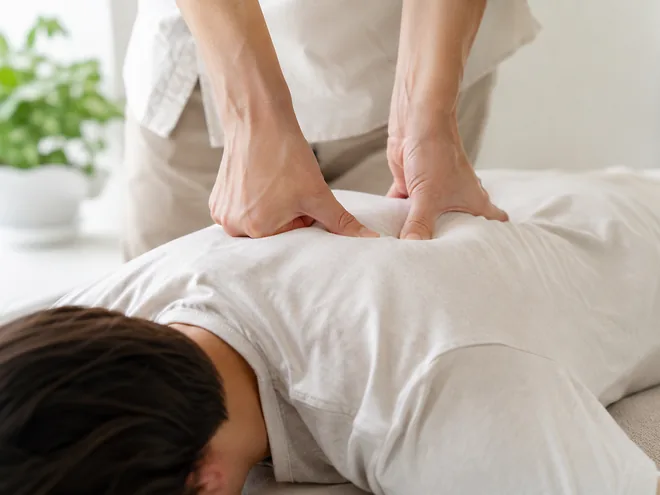
Meridian Massage
Meridian Massage is performed fully clothed, using pressure, movement and meridian-based bodywork.
The simplest difference
Oil massage usually uses oil or lotion applied directly to the skin, with gliding, kneading and rubbing strokes. Meridian Massage is performed through clothing and does not use oil or lotion. Instead, it uses comfortable pressure, gentle stretches, rocking, joint mobilisation and work along meridian and channel pathways.
Oil massage often focuses on local muscular tension or general relaxation. Meridian Massage is informed by Chinese Medicine and East Asian bodywork, which considers the body through interconnected channels and broader patterns of tension, stress and regulation.
Both approaches can be valuable. They come from different traditions and create a different treatment experience.
Meridian Massage comes from a different way of understanding the body
In Chinese Medicine and East Asian bodywork, the body is understood through relationships between channels (meridians), organs, tissues, movement, breath, emotions and regulation. Meridian Massage is not only concerned with the local sore area — a practitioner may work along channels and related areas of the body to support the whole pattern.
For example, neck and shoulder tension might be considered alongside stress, breathing patterns, posture, sleep quality, jaw tension or digestive strain. Rather than treating each symptom separately, the session works with the body as an interconnected system.
More than musculoskeletal bodywork
While Meridian Massage can be useful for neck, shoulder, back and hip tension, it is not only a musculoskeletal treatment. Because it is informed by Chinese Medicine, a session may also consider how stress, sleep, digestion, fatigue and emotional strain are showing up in the body.
People may seek Meridian Massage for stress, nervous system regulation, sleep, fatigue, headaches, digestive discomfort, emotional tension or a feeling of being stuck or depleted. These are not treated as separate medical conditions, but as patterns that can be supported through careful, attentive bodywork.
You stay fully clothed
Clients wear comfortable clothing they can move in. There is no oil and no need to undress. This can feel more comfortable for people who prefer clothed bodywork, want a quieter experience, or do not want a spa-style massage.
The style of touch is different
Oil massage often uses gliding, kneading, rubbing and strokes through oil or lotion on the skin. Meridian Massage uses sustained pressure with palms, thumbs and forearms, along with gentle stretches, rocking, joint mobilisation and moments of stillness.
The pace can feel slower, quieter and more meditative. Pressure can be adjusted at any time, and the session may move between local areas of tension and related channel pathways.
A whole-body approach to stress, tension and regulation
Meridian Massage often works with the relationship between body tension and the nervous system. Stress may show up as tight shoulders, shallow breathing, jaw tension, poor sleep, headaches, fatigue or digestive discomfort. Rather than separating the body into isolated parts, Meridian Massage works with the body as an interconnected system.
The session does not need to treat each issue separately. Instead, it can support the body to settle, move and regulate more easily through grounding, rhythmic and responsive bodywork.
Which one should you choose?
Oil massage may suit you if:
- you enjoy oil-based massage
- you want direct work on the skin
- you prefer gliding, kneading or spa-style relaxation
- you want a familiar massage experience
Meridian Massage may suit you if:
- you prefer to stay clothed
- you want slower, quieter bodywork
- you like pressure, stretching, mobilisation and stillness
- you are interested in Chinese Medicine or meridian-based bodywork
- you want support for stress, posture, tension, sleep, fatigue or general wellbeing
- you want a session that considers more than the local sore muscle
What to expect at Back to Breath
Jack offers Shiatsu and Meridian Massage sessions in Melbourne CBD. Sessions are fully clothed, unhurried and adapted to how you feel on the day. Jack is diploma-qualified in Shiatsu & East Asian Medicine, currently completing a Bachelor of Health Science in Chinese Medicine and a member of the Shiatsu Therapy Association of Australia.
If you're new to this style of bodywork, the first session guide explains what to expect in more detail.
How to book
Let me know whether Saturday or Tuesday suits you, and whether you prefer morning or afternoon. I’ll confirm a date and time by email.
Frequently asked questions
Does Meridian Massage use oil?
No. Meridian Massage is performed through clothing and does not use oil or lotion.
Do I need to undress?
No. Sessions are fully clothed. Wear comfortable clothing you can move in.
Is Meridian Massage only for sore muscles?
No. While it can support muscular tension and posture, Meridian Massage is informed by Chinese Medicine and may also support broader patterns involving stress, sleep, fatigue and general wellbeing.
Is Meridian Massage the same as Shiatsu?
Meridian Massage at Back to Breath is closely related to Shiatsu and East Asian bodywork. It uses pressure, stretches, mobilisation and meridian-based treatment principles.
Is oil massage better or worse?
Neither is better for everyone. They are different styles of bodywork. The best choice depends on the kind of touch, pace and treatment experience you prefer.
Curious to try Meridian Massage?
Let me know whether Saturday or Tuesday suits you, and whether you prefer morning or afternoon. I’ll confirm a date and time by email.
Enquire about a session
Selected insurance rebates available